
Myths About Decaf
I’ll admit — before I took the time to research and ask better questions, I had quietly accepted the stereotype that decaf coffee was somehow lesser. Something you drank only when you had to, not when you wanted to. Every decaf I’d tasted carried the same muted, slightly off character, and I assumed that was simply the nature of decaffeination.
But coffee has a way of rewarding curiosity.
The more I learned about processing, sourcing, and modern decaffeination methods, the more that assumption began to unravel. It wasn’t that decaf coffee was inherently worse — it was that I hadn’t met a carefully produced one yet.
So this isn’t a defense of compromise coffee. It’s a reframing.
Whether you already drink decaf, avoid caffeine for intention, or just haven’t given it a fair chance in years, understanding how it’s made changes the experience entirely. When the process respects the coffee, the cup still tells its story.
Let’s slow down and look at a few common myths…
Myth 1 — “I don’t have choices when it comes to decaf.”
Not all decaf is the same.
Decaf isn’t a single category — it’s a process applied to a coffee.
Origin, variety, elevation, processing, and roast still shape the cup just as much as they do in fully caffeinated coffee.
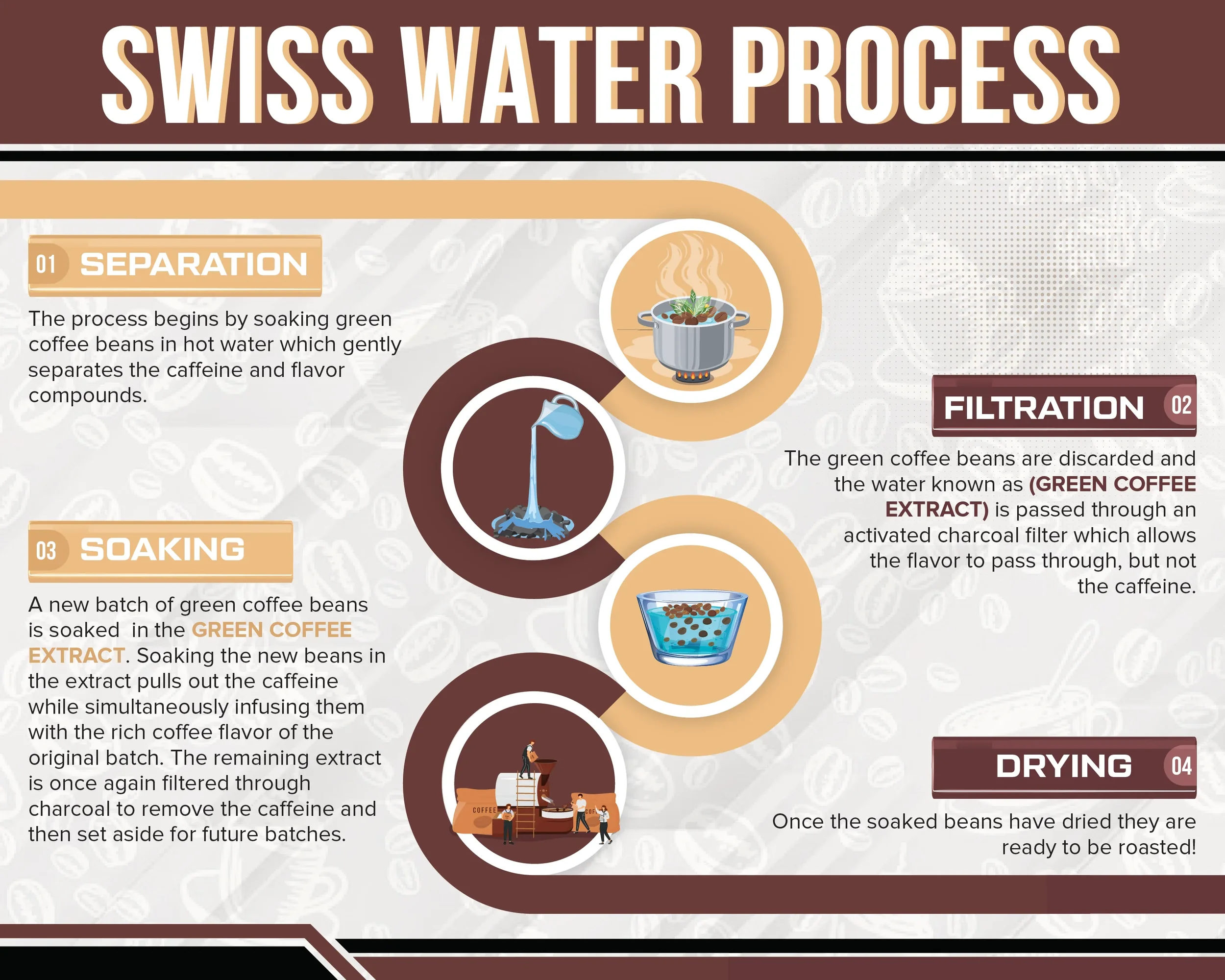
Starting with carefully grown green coffee and using a gentle, chemical-free method like Swiss Water allows those qualities to remain present. The difference isn’t subtle — it’s the difference between a flat cup and one that still feels alive.
Myth 2 — “Decaf has to contain harsh or harmful chemicals.”
Not necessarily.
Some decaffeination methods do rely on chemical solvents, but others do not. The Swiss Water® Process uses only water, temperature, and time to remove caffeine while preserving soluble flavor compounds.
So the question isn’t, is it decaf?
It’s— how was it decaffeinated?
Transparency matters.
Myth 3 — “Decaf tastes funny.”
What many people remember isn’t decaf — it’s poorly processed coffee.
When caffeine is removed aggressively, delicate aromatics leave with it. But when done gently, the structure of the coffee remains intact. Acidity softens slightly, the body often becomes rounder, and sweetness becomes easier to notice.
In blind tastings, well-produced decaf coffees are often indistinguishable — and occasionally preferred — especially later in the day when the palate isn’t chasing stimulation.
Myth 4 — “Coffee’s benefits come only from caffeine.”
Caffeine is just one compound in coffee — and not even the most abundant.
Coffee naturally contains polyphenols, antioxidants, and organic acids that remain present after decaffeination. Many people find they can enjoy coffee more comfortably without the jitter or sleep disruption, while still experiencing the ritual and gentle lift of the cup itself.
Sometimes the body listens better when the noise is turned down.
Myth 5 — “Decaf still contains a significant amount of caffeine.”
No decaffeination removes 100% of caffeine, but methods like Swiss Water, coffee leaves the facility 99.9% caffeine free.
For most people, that remaining trace is not enough to affect sleep or circadian rhythm — which means coffee can return to its original role: a comforting evening drink, not just a morning fuel.
Myth 6 — “Decaf is only for people who can’t handle caffeine.”
Decaf isn’t a restriction — it’s an option.
Some people choose it for health, some for sleep, and some simply because they want another cup without extending the day. Coffee doesn’t have to be tied to productivity to be meaningful. It can exist purely for warmth, conversation, or habit.
Myth 7 — “Good coffee should wake you up.”
Historically, coffee was a social beverage long before it was an energy strategy.
Removing caffeine shifts the focus back to flavor, aroma, and presence. You’re no longer drinking it for what it does to you, but for what it is.
And sometimes that’s when you notice the most.
Coming Soon…
We haven’t begun production yet, but the decisions are already being made with care.
At Espresso Thyme, our decaf will be sourced exclusively from Swiss Water® processed coffees — not because it’s trendy, and not simply because it’s chemical-free, but because it preserves what matters most: the character of the coffee itself.
We want every cup we serve to feel considered. Something you can order in the evening without hesitation, share with someone who avoids caffeine, or choose simply because it tastes good — not because it’s the only option left.
Decaf shouldn’t feel like a substitute.
It should feel like another door into the same experience.
So when Espresso Thyme begins pouring, the decaf menu won’t exist as an afterthought.
Why Espresso Thyme Chose Swiss Water®
We chose Swiss Water® because it reflects the same values we built everything else around:
transparency in process
respect for origin
flavor without compromise
coffee that supports rest, ritual, and balance
Using a chemical-free decaffeination method means the coffee can remain complete — not altered into something different, but gently adjusted so it can be enjoyed at any hour.
It allows us to serve coffee that fits the full rhythm of a day: morning focus, afternoon pause, and evening wind-down, without asking you to give anything up to enjoy it.
Decaf isn’t an alternative here.
It’s simply another moment for coffee.
Good espresso takes thyme.
The rest does too.
