
The Washed Process: How Clean Fermentation Shapes Coffee Forever
Hi everyone! Welcome to another Roastery Journal post—where I talk about my favorite topics and trends in the coffee community and world of roasting, processing methods, caffeine levels, and flavor profiles that make coffee so fascinating to us!
Coffee tells its story long before it reaches the cup, and long before roasting. Each seed begins a layered journey shaped by place, people, and process. One of the most defining moments in that journey happens immediately after harvest: processing.
For this roastery journal entry, we’re focusing on a coffee from Peru, exploring how the washed process—often called “clean fermentation”—creates clarity, structure, and longevity in flavor.
Origin: Provincia de Cajamarca, Peru
Peru’s coffee history started long before many other Central and South American countries. For much of its early production, coffee was primarily consumed domestically. Over time, global market disruptions prompted Peru to expand its exports, setting the stage for a remarkable transformation.
In recent years, significant investments in sustainability, infrastructure, and quality control have brought Peruvian coffee into the global spotlight. Thanks to skilled producing partners deeply connected to their land, coffees from Peru now consistently showcase vibrant acidity, refined sweetness, and layered complexity.
Our future sourcing in the region is especially encouraging, reinforcing optimism for Peru’s future as a leading origin for thoughtfully produced, high-quality coffee.
Variety: Typica & Bourbon
This lot features Typica and Bourbon, two varieties foundational to modern coffee cultivation.
Typica is often considered the genetic ancestor of many coffee varieties grown today. Originating in East Africa and spreading through Brazil and beyond, Typica holds immense cultural importance and is revered for its clean structure and elegant cup profile.
Bourbon, similarly prized, contributes sweetness and balance. Together, these varieties form a classic base that allows processing and terroir to shine.
Elevation + Cherry Development
Elevation plays a critical role in shaping coffee flavor. Grown at 1,600 meters above sea level, this Peruvian coffee benefits from cooler temperatures, which slow cherry development.
This extended growing period allows sugars and organic acids to mature more fully, resulting in brighter acidity, increased sweetness, and greater flavor distinction. Higher elevations also tend to reduce pest pressure, supporting healthier plants and more consistent quality—one of the reasons high-altitude coffees are so highly sought after.
Processing Method: Washed
The washed process—sometimes referred to as wet processing—is one of the most labor-intensive and precise methods used in coffee production.
After harvest, ripe cherries are delivered to a wet mill, also known as a washing station. Here, the coffee is guided through several meticulous steps designed to remove the fruit entirely while preserving the integrity of the seed.
Cherries are first fed through a de-pulping machine, which strips away the outer skin and some of the sticky mucilage. What remains is broken down through controlled fermentation in tanks or troughs of water.
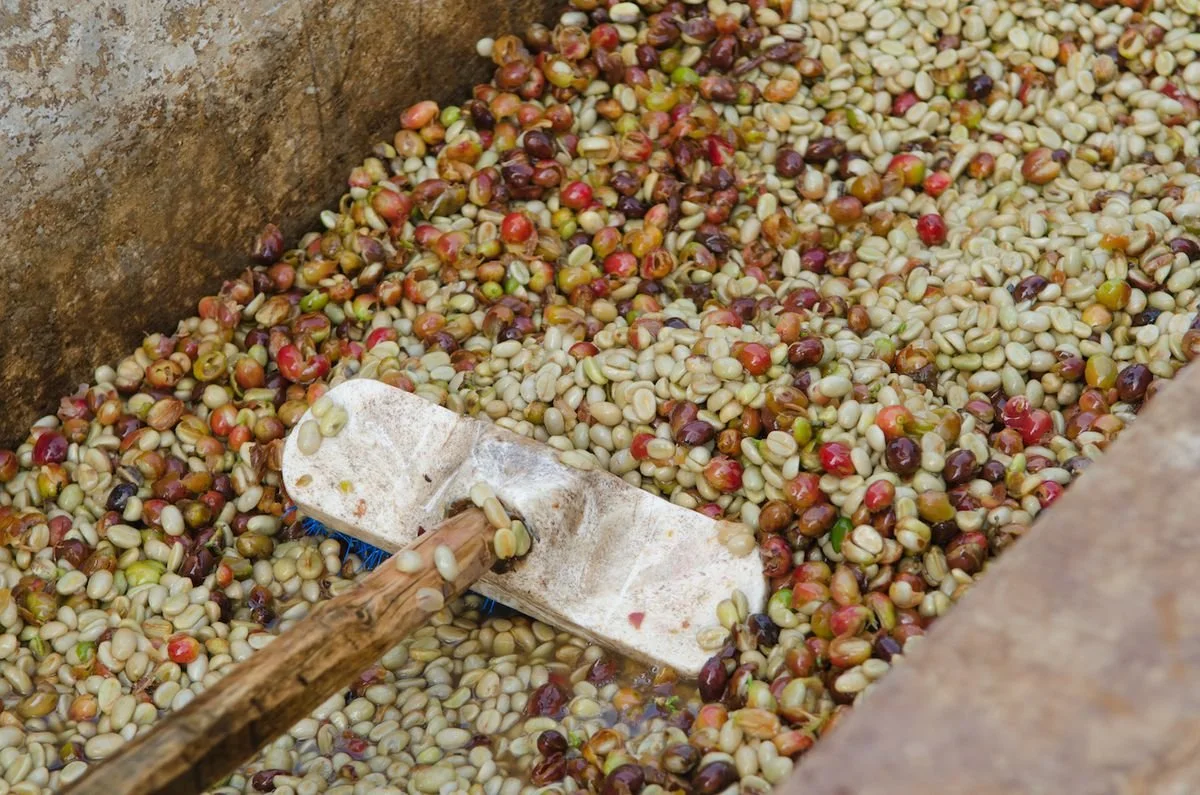
It often surprises people to learn that all coffee undergoes fermentation, even washed coffees. The difference lies in intention and control. In washed processing, fermentation is brief and precise—just long enough to loosen the remaining fruit without introducing overpowering flavors.
Once fermentation is complete, the seeds are thoroughly rinsed until no pectin or mucilage remains, leaving only a thin protective layer of parchment. This cleanliness is what defines a fully washed lot and sets the stage for its signature clarity in the cup.
Drying: Raised-Bed Dried
After washing, the coffee is dried on raised beds—scaffold-like structures that elevate perforated trays above the ground.
This method allows airflow from nearly every direction, promoting even moisture loss and extending drying time. When paired with regular turning and, in some cases, partial sun shading, raised-bed drying helps protect the coffee’s cellular structure from excessive heat or UV damage.
The result is a more stable, consistent coffee with preserved aromatics and long-term quality potential.
Roasting Philosophy
Roasting in small, precise 1-lb batches allows us to highlight the washed process’s defining traits: clarity, balance, and structure, rather than masking them with roast-driven flavors.
Why Processing Matters
When it comes to coffee, there is always more happening beneath the surface.
Processing methods—natural, washed, honey, or experimental—play a pivotal role in determining not only what a coffee tastes like, but how it behaves during brewing. These decisions have lasting implications that follow the coffee for its entire life.
Washed coffees tend to express floral aromatics, tea-like qualities, bright citric or malic acidity, and a lighter body. While fruit notes may still appear, they are often more subtle—think stone fruit or apple rather than tropical or fermented flavors.
Because washed coffees are typically denser and less soluble, they benefit from slightly finer grinds and hotter water when brewing. This extra effort rewards the drinker with a clean, articulate cup that clearly reflects origin and variety.
Summary
The washed process is defined by precision, patience, and clarity. Through careful de-pulping, controlled fermentation, and thorough rinsing, the coffee seed is fully separated from its fruit before drying—leaving behind nothing but structure, density, and purity.
This method removes variables, allowing origin, variety, and elevation to speak without interference. Together, these elements create a coffee that is refined, expressive, and deeply rooted in place.
In this Peruvian lot, clean fermentation preserves brightness and balance while enhancing acidity and refined sweetness. Raised-bed drying further protects the integrity of the coffee, ensuring even moisture loss and long-term stability. The result is a cup that feels intentional and transparent—one where flavor is shaped not by excess, but by restraint.
Washed processing doesn’t aim to impress through intensity; it reveals coffee at its most honest, offering a clear expression of place that lasts far beyond the first sip.
The Espresso Thyme Perspective
At Espresso Thyme, we believe good coffee doesn’t rush its story.
The washed process represents patience, precision, and respect—for the seed, the producer, and the drinker. It’s a reminder that clarity isn’t accidental; it’s earned through thoughtful decisions and steady care.
This Peruvian coffee reflects everything we love about washed processing: a quiet confidence, a sense of balance, and a flavor that lingers long after the cup is empty. Clean fermentation doesn’t just shape how coffee tastes—it shapes how we experience it, slowing us down and inviting us to notice what’s already there.
Because good espresso, after all, takes thyme.

Country:: Peru The Bean:: Cajamarca
